Engineered for extreme Thermal Design Power (TDP) architectures, guaranteeing low thermal resistance and optimal performance under sustained workloads.
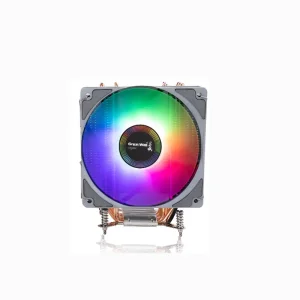
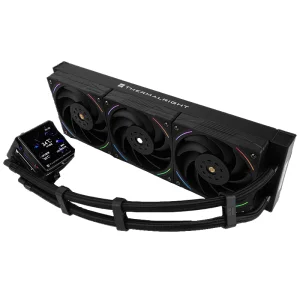
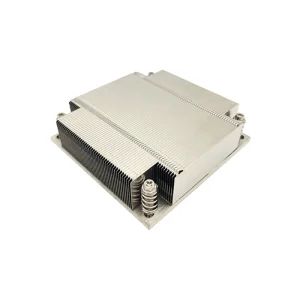
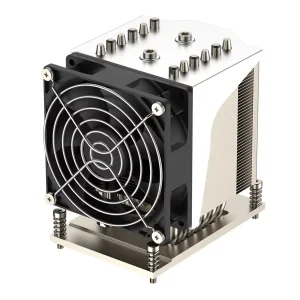
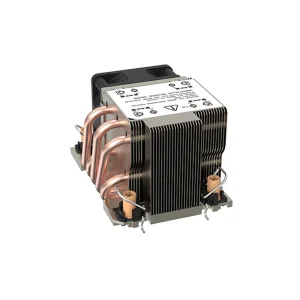
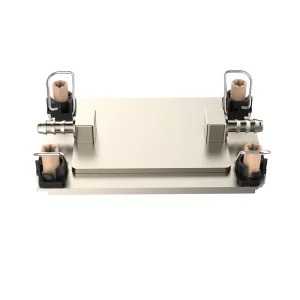
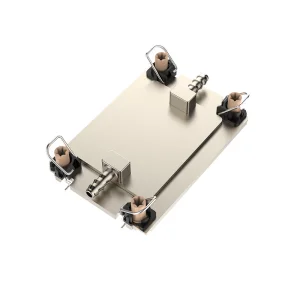
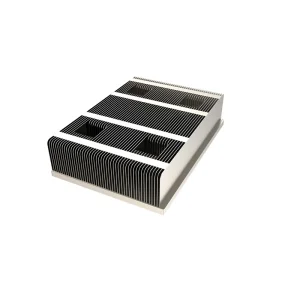
The explosion of generative artificial intelligence (AI), machine learning (ML), high-performance computing (HPC), and 5G networking has generated unprecedented data demands. At the center of this technological revolution is the server rack—and, more specifically, the system that keeps it running: the Server Radiator.
In today's commercial computing architectures, thermal management is no longer a peripheral consideration. It is the defining design limitation of advanced data processing systems. As high-speed processors push past TDP limits of 300W and liquid blocks hit 400W to 500W+ thresholds, server component failure rates rise exponentially if temperatures are not strictly managed. Hardware engineers globally are turning to dedicated server radiator manufacturers to source custom-engineered heat sinks, vapor chambers, and water blocks that balance cost, space constraints, and cooling efficiency.
From high-conductivity copper bases to precision-welded micro-fin geometries, high-volume manufacturing facilities supply standard and customizable solutions. These units are critical for hyperscale operators and corporate system builders who prioritize low Power Usage Effectiveness (PUE) ratios and prolonged server lifespans.
Exploring the migration path from standard heat pipes to dynamic Vapor Chambers and direct-to-chip liquid cooling systems.
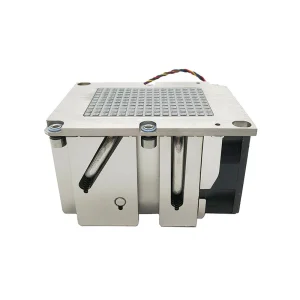
Unlike traditional copper blocks, modern vapor chambers utilize an evacuated copper envelope with an internal capillary wick structure. By evaporating and condensing liquid in a vacuum cycle, vapor chambers achieve thermal conductivities multiple times higher than solid copper, spreading heat uniformly across fin stacks.
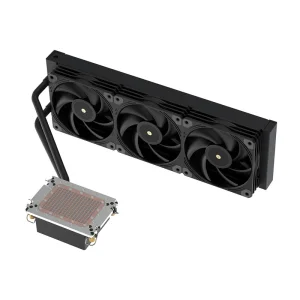
As server density surpasses 50kW per rack, air cooling systems hit their physical limitations. Direct-to-chip liquid cooling targets high-heat zones directly, carrying heat away through glycol-water loops to heat exchangers, ensuring predictable core temperatures.
Skived fin technology allows for highly dense fin structures with zero thermal interface resistance between the base and fins. Combined with pure copper compositions, modern radiators maximize surface area in space-constrained 1U and 2U chassis environments.
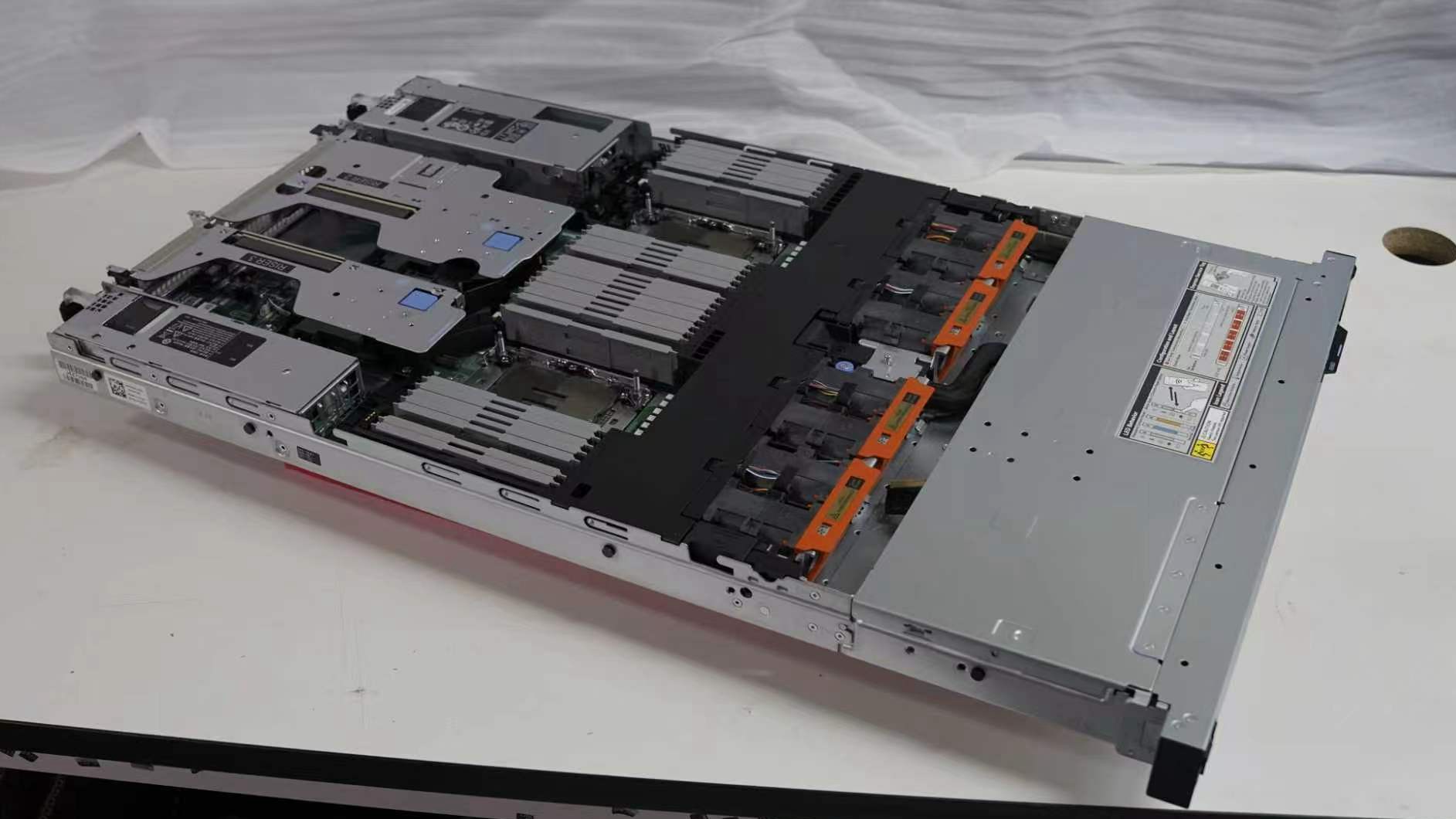
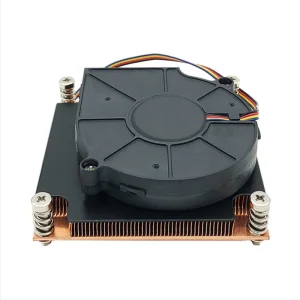
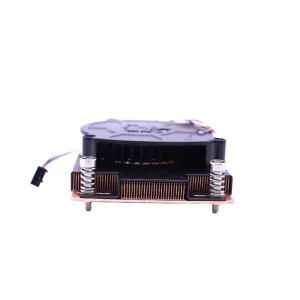
The structural challenges facing server thermal designs are closely tied to the height constraints of standard data center racks. In a 1U server (1.75 inches / 44.45 mm height limit), air flow resistance is extremely high. Design configurations require specialized blowers alongside tightly arrayed copper fins to move air through the chassis efficiently. In 2U and 4U systems, radiator profiles can be scaled up to use larger active fans with slower rotational speeds, reducing acoustic output while maintaining high cubic feet per minute (CFM) specifications.
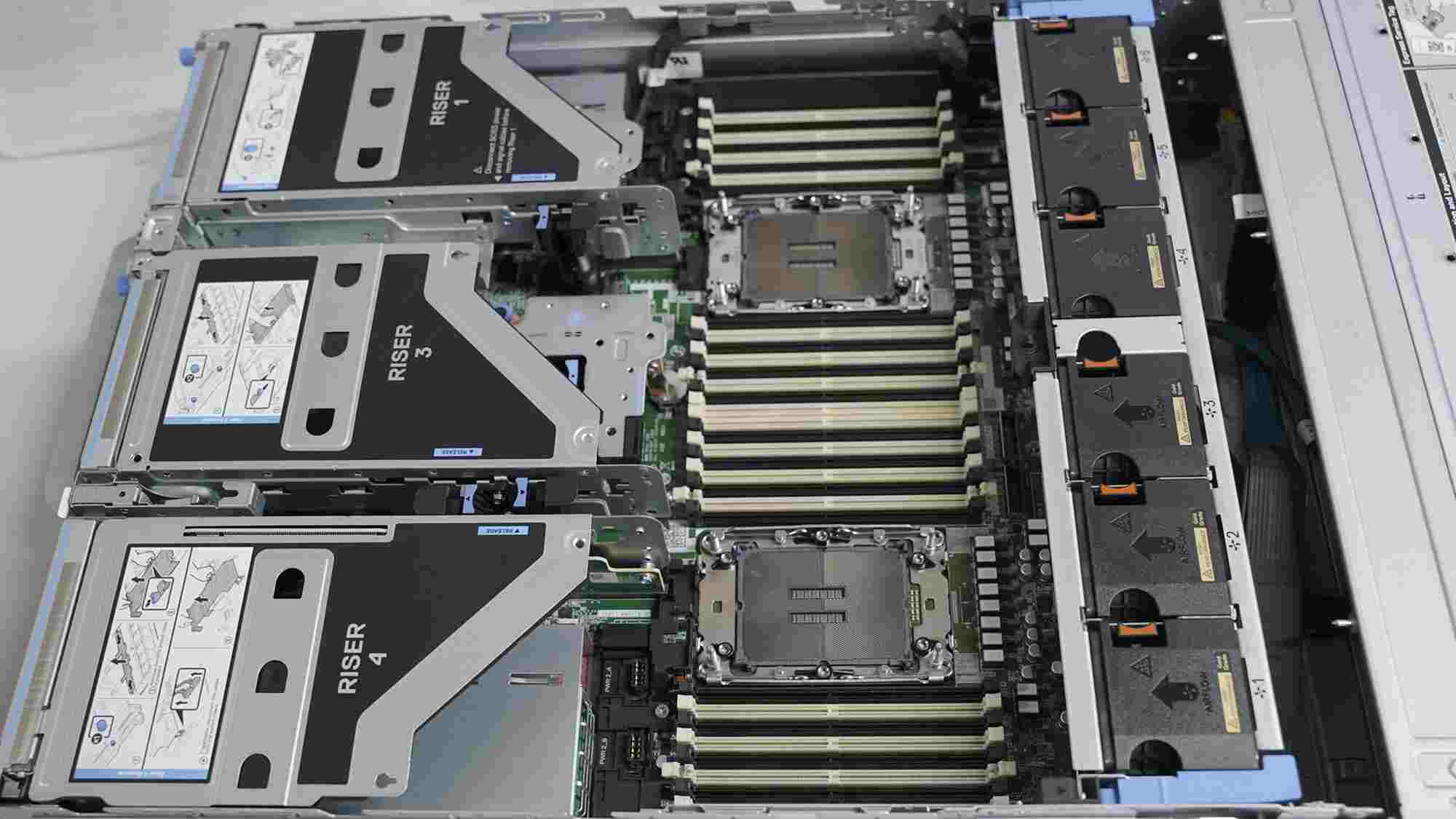
Additionally, the integration of advanced graphics processing units (GPUs) and double data rate (DDR) memory channels has changed layout requirements. CPU radiators must now fit alongside RAM cooling modules and power distribution heat sinks without blocking system airflow. This has driven the industry toward custom CAD designs and optimized engineering loops.
High-efficiency cooling systems are deployed based on localized environmental profiles and infrastructure limitations:
As memory speeds increase, high-performance DDR5 memory modules generate significant heat of their own. Thermal engineers must take a holistic view of the motherboard layout, analyzing heat transfer from both CPU sockets and adjacent high-speed memory slots.
By coordinating server radiator dynamics with memory heat spreader configurations, system integrators can prevent thermal throttling across all subsystems. This structural cohesion is a key focus for advanced manufacturing partners globally.
Velmix Technology Co., Ltd. is a professional DDR5 memory manufacturer based in Shenzhen, China, specializing in the research, development, production, and global distribution of high-performance DRAM memory solutions.
Since its establishment in 2017, Velmix has been committed to delivering reliable, high-speed memory products for consumer electronics, industrial applications, gaming systems, servers, and embedded computing. Operating from a modern manufacturing facility covering 368㎡, we combine advanced production technologies with strict quality management to ensure every memory module meets international performance and reliability standards.
Our experienced engineering team continuously develops innovative DDR5 memory solutions to meet the evolving demands of AI computing, edge devices, cloud infrastructure, and next-generation computing platforms. Today, Velmix serves customers in more than 40 countries and regions, offering flexible OEM and ODM manufacturing services for global brands, distributors, system integrators, and industrial equipment manufacturers.
By focusing on product consistency, fast delivery, and technical innovation, we have built long-term partnerships across Europe, North America, Southeast Asia, and the Middle East. Through integration with key component suppliers, we help partners resolve thermal, signal, and mechanical design issues simultaneously.
Our manufacturing facility is equipped to conduct 100% full inspections before shipment, utilizing signal integrity testing, burn-in testing, compatibility assessments, and functional verification.
| Item | Information & Specifications |
|---|---|
| Company Name | Velmix Technology Co., Ltd. |
| Established | 2017 |
| Facility Area | 368㎡ |
| Annual Export Revenue | USD 18.6 Million |
| Export Experience | 8 Years |
| Industry Experience | 15 Years |
| Quality Control | 100% Full Inspection Before Shipment |
| Product Inspection Methods | Signal Integrity Test, Burn-in Test, Compatibility Test, Functional Test & Random Sampling |
| QC Staff | 56 Employees |
| Business Type | Manufacturer & Exporter |
| Main Markets | North America, Europe, Southeast Asia, Middle East & South America |
| Supply Chain Partners | 986+ Partners Globally |
| Main Customer Types | Brand Owners, OEM Manufacturers, System Integrators, Distributors & Wholesalers |
| R&D Capability | Independent Product Design, PCB Development & Firmware Optimization |
| Customization Options | OEM, ODM, Private Label, Customized Capacity, Heat Spreader, PCB Color & Packaging |
| New Products Launched Last Year | 138 Models |
| R&D Engineers | 84 Engineers |
Selecting the appropriate cooling interface requires careful consideration of the socket type, space profile, and thermal output:
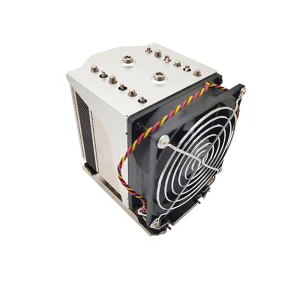
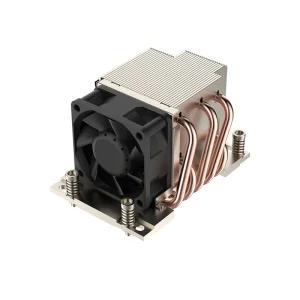
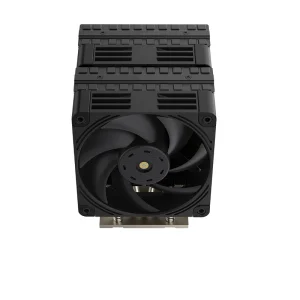
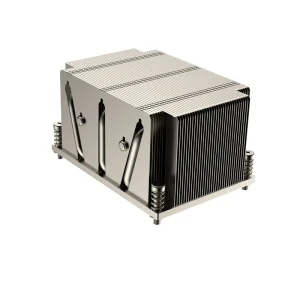
Designed for Intel Xeon Scalable processors. Liquid block models are typically rated for 400W TDP, while 2U active air coolers handle 300W-350W TDP using copper fin structures and high-airflow fans.
Optimized for AMD EPYC high-core-count processors. Radiators for these systems feature a large contact plate to cover the multi-die layout, ensuring uniform heat transfer across the entire package.
Commonly deployed in 1U networking appliances, microservers, and edge devices. These radiators use 1U blower configurations to provide reliable cooling within a compact height envelope.
System designers must also optimize the Thermal Interface Material (TIM) to minimize contact resistance between the CPU integrated heat spreader (IHS) and the radiator's copper base. Selecting high-grade phase-change TIMs ensures long-term thermal stability, preventing dry-out and degradation over years of uninterrupted operation.
Technical answers to common questions about server thermal design and component sourcing.
Passive radiators rely entirely on the system's chassis fans to force air through their fin stacks. They are typically used in standardized multi-node server racks where large, redundant chassis fan walls draw air through the system. Active radiators feature dedicated fans directly mounted to the heatsink. These are common in workstation configurations, 4U systems, or isolated edge nodes that cannot rely on structured chassis airflow.
Copper has a thermal conductivity of approximately 401 W/m·K, which is nearly double that of aluminum (approx. 205 W/m·K). This allows copper to absorb and transfer heat away from the processor core much faster. However, because aluminum is lighter and more cost-effective, manufacturers often design hybrid radiators with a copper base to quickly absorb heat and aluminum fins to dissipate it to passing air.
A standard heat pipe transfers heat linearly along its axis. A vapor chamber, on the other hand, is a flat, two-dimensional chamber that spreads heat uniformly in all directions across its entire plane. This makes vapor chambers highly effective for hot-spot mitigation on high-TDP multi-core processors, allowing the heat to be distributed evenly to the cooling fins.
Air-cooled 1U systems struggle with TDPs over 250W due to the space constraints limiting heatsink surface area. For high-density systems running chips over 250W TDP, designers typically transition to liquid cooling loops (direct-to-chip blocks) or move to a 2U or 4U chassis format to accommodate larger radiators and fans.
Sourcing partners should verify that the manufacturer performs helium leak testing for vapor chambers and liquid cooling blocks, fan reliability testing (including L10 lifetime metrics), base flatness measurements (micro-inch tolerances), and thermal performance testing under simulated TDP loads to ensure long-term stability.
Explore our line of server radiators, heat pipes, and integrated water block modules designed for continuous operation.
 Velmix