China Best DDR5 RAM Why Is It Faster Than DDR4?

Time:2026-10-31 Author:Sienna
0%

Why DDR5 is faster than DDR4 is a useful question for anyone comparing modern memory kits. The answer is not simply a higher number on a product box. DDR5 transfers data at higher rates, offers more bank groups, and divides each DIMM into two independent 32-bit channels. These changes help the memory controller handle more requests and move more data. The result can be smoother performance in bandwidth-heavy tasks, such as rendering large scenes or working with high-resolution video.

As technology analyst Dr. Ian Cutress has discussed in his memory coverage, real-world performance depends on more than peak bandwidth. The following is a paraphrase, not a verified verbatim quotation: “Higher memory bandwidth helps, but the workload determines how much users actually gain.” That distinction matters. A demanding application may benefit noticeably, while everyday browsing may feel much the same.

There is a trade-off. DDR5 kits can have higher latency figures than some DDR4 kits, and faster memory only works when the processor and motherboard support it. Check compatibility before buying. Also compare tested speeds, timings, and system performance—not just advertised transfer rates. Small details count.

For buyers looking for China’s best DDR5 RAM, the practical choice depends on the intended workload, platform, and budget. DDR5 offers a stronger bandwidth foundation, but it is not automatically the best upgrade for every computer. The specifications tell part of the story. Testing tells more.
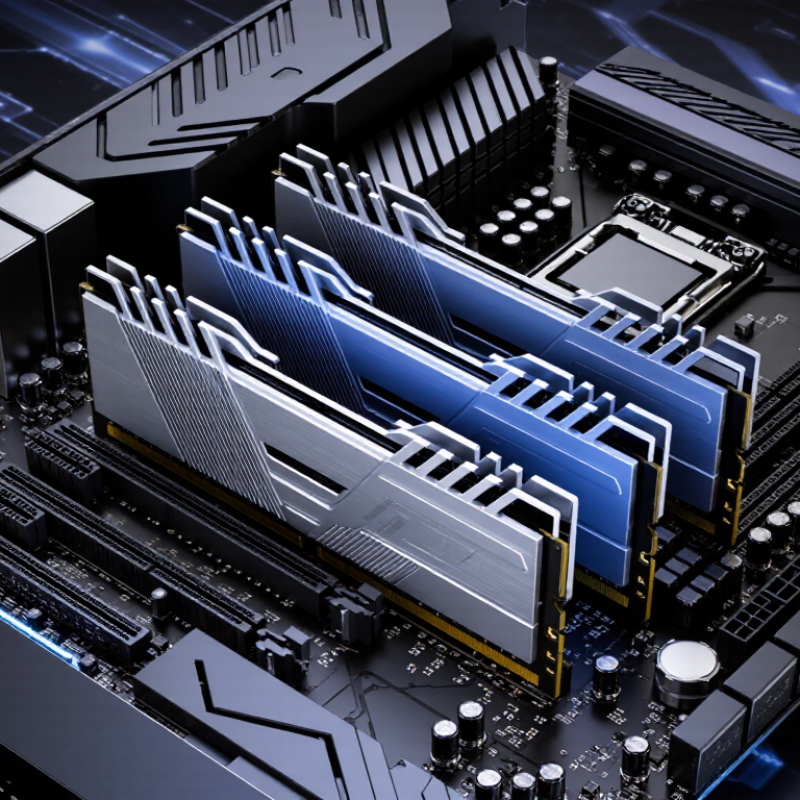
China Best DDR5 RAM Why Is It Faster Than DDR4?

What DDR5 RAM Is and How It Compares with DDR4

DDR5 is the fifth generation of double data rate memory used in modern computers. It transfers data on both edges of each clock cycle, as DDR4 does, but its design supports higher data rates and greater capacity. A standard DDR5 module also splits its data path into two independent 32-bit subchannels. This can help the memory controller handle smaller requests more efficiently. A small architectural change, with practical effects.

Compared with DDR4, DDR5 starts at higher standard transfer rates and can move more data per second. Its burst length is doubled, allowing more data to travel during each access. DDR5 also uses a lower nominal voltage, 1.1 volts versus DDR4’s 1.2 volts, and places power management on the module. These changes can improve bandwidth and power handling, but they do not guarantee lower latency. Timings matter. Some DDR4 systems may feel just as responsive in everyday tasks.

Compatibility is a key difference: DDR5 and DDR4 use different module designs, so they cannot be swapped in the same memory slot. The processor and motherboard must support the chosen generation. DDR5 chips include on-die error correction, but that is not the same as system-level ECC memory. For a real comparison, check supported speeds, timings, capacity, and the workload. Benchmarks can help, though results vary by system. A faster number on the package is not the whole story.

How DDR5’s Dual Channels Increase Data Transfer

DDR5’s speed advantage is not just a higher clock rate. Each standard DDR5 memory module splits its 64-bit data path into two independent 32-bit subchannels. The JEDEC DDR5 specification starts at 4,800 MT/s, while its DDR4 specification reaches up to 3,200 MT/s. That gives DDR5 more potential bandwidth, but the split also matters: a controller can address smaller data blocks through either subchannel, rather than tying every request to one wider channel. Think of two narrow checkout lines instead of one. Less waiting can mean steadier transfers when several requests arrive together.

The benefit shows up most clearly in mixed workloads, such as a game loading textures while background tasks use memory. Each subchannel can handle an independent operation, helping the controller keep data moving. Still, this is not a guaranteed doubling of real-world speed. Application behavior, processor design, and memory timings all shape the result. Technical testing reported by Tom’s Hardware has likewise shown that memory-generation gains vary by workload, rather than translating directly into equal performance gains.

One useful caveat: “dual channel” here describes the two subchannels within a DDR5 module; it is different from installing two modules for a dual-channel memory configuration. Small distinction. Easy to miss.

Why DDR5’s Higher Bandwidth Can Improve Performance

DDR5 can transfer more data per second than DDR4, giving the processor a wider path to memory. That extra bandwidth matters when many cores need data at once. Picture several workers reaching for parts on a busy bench; a wider supply line can reduce waiting. DDR5 also uses two independent 32-bit subchannels per module, instead of DDR4’s single 64-bit channel. This can help memory handle requests more efficiently.

Not magic.

The clearest gains often appear in bandwidth-heavy tasks, such as integrated graphics, large data sets, and some content-creation workloads. Games may benefit too, but the difference depends on the processor, graphics hardware, and settings. For everyday browsing or light office work, the change can be hard to notice. Timing and latency still matter, and higher bandwidth does not automatically mean lower latency. Real results vary, sometimes more than a quick benchmark suggests. I would compare complete system tests, not memory speed figures alone; bandwidth is important, but it is only part of the story.

How Capacity, Speed, and Latency Affect DDR5 Performance

China Best DDR5 RAM: Why Is It Faster Than DDR4?

DDR5’s main advantage is bandwidth: it transfers more data per second than comparable DDR4 memory. That can help workloads that move large files or feed integrated graphics. In practice, the difference depends on the processor, memory configuration, and software. Small gains add up. Capacity matters too. If a computer runs short of memory, it may rely on slower storage, causing pauses when many applications are open. Moving from 16GB to 32GB can help demanding tasks, but extra capacity alone does not make every program faster.

Latency needs a closer look. DDR5 kits may show higher CAS latency figures than DDR4 kits, but those numbers do not tell the whole story. Higher transfer rates can offset some of the delay; compare timings and real-world tests rather than one specification. A system with suitable dual-channel memory can also perform better than one with a mismatched setup. It is easy to overvalue the biggest speed number on a package. Not always.

Tips: Match memory capacity and speed to your processor’s supported specifications. Check that the modules are installed in the recommended slots, then enable the correct memory profile if needed. For a fair comparison, test the same task under the same conditions.

How to Choose DDR5 RAM in China

Choosing DDR5 RAM in China starts with compatibility, not the largest speed printed on a listing. Check the motherboard manual for supported memory generation, capacity, and tested module configurations. Fit comes first. A DDR5 kit will not work in a DDR4 slot, even if the modules look similar. JEDEC’s DDR5 and DDR4 standards set baseline data rates of 4,800 MT/s and 3,200 MT/s, respectively. These figures describe transfer rates, not guaranteed gains in every application.

For a typical desktop, compare matched two-module kits, such as 2 × 16 GB, and verify the processor’s supported speeds. Check the motherboard’s qualified memory list when available. Faster kits may need a memory profile enabled in firmware, and stability can vary with the processor and board. I would not chase the highest number. Lower timings and real workload performance matter, too.

Prices change, so compare the full kit price, local return terms, and warranty coverage before buying. TrendForce’s January 2024 DRAM market report forecast conventional DRAM contract prices rising 13–18% quarter over quarter. That is historical market data, not a current Chinese retail quote. Still, it shows why checking recent prices matters. One detail is easy to miss: two separate modules may not cost the same as a matched kit. Verify the exact module part numbers before checkout.

FAQS

Why can DDR5 improve performance over DDR4?

DDR5 transfers more data per second, giving processors a wider path to memory. This can reduce waiting when many cores request data. Not magic.

Which tasks are most likely to benefit from DDR5?

Integrated graphics, large datasets, and some content-creation workloads may benefit. The gains depend on the processor and software.

Will DDR5 make everyday browsing noticeably faster?

Often, the difference is hard to notice during light browsing or office work. It depends.

Does higher memory bandwidth mean lower latency?

No. Bandwidth and latency are different measures. Compare timings and real-world tests, not just the speed printed on a package.

How can memory capacity affect performance?

When memory runs short, a computer may use slower storage. Moving from 16GB to 32GB can help demanding tasks with many open applications. More capacity does not speed up every program.

What does DDR5’s two-subchannel design do?

Each module has two independent 32-bit subchannels instead of one 64-bit channel. This can help handle requests efficiently. Results still vary.

Can memory installation affect performance?

Yes. Use the processor-supported configuration and recommended module slots. Enable the correct memory profile if needed.

How should I compare DDR4 and DDR5 systems?

Run the same task under the same conditions, then compare complete system results. I might be overvaluing a quick benchmark; one test can miss real differences.

Conclusion

DDR5 RAM is the next generation of desktop memory, designed to move more data efficiently than DDR4. Why DDR5 is faster than DDR4 comes down to several improvements, including higher potential data rates, greater bandwidth, and a memory architecture that handles data through two independent 32-bit channels per module. These channels can help the system manage data transfers more effectively, while increased bandwidth can support demanding tasks such as gaming, content creation, and multitasking.

Overall performance depends on more than the DDR generation alone. Capacity affects how many applications and tasks can run smoothly, speed influences data transfer rates, and latency affects how quickly memory responds to requests. When choosing DDR5 RAM in China, consider your computer’s compatibility, the amount of memory you need, and a balanced combination of speed and latency. Selecting memory that suits your system and workload can help you make the most of DDR5 without paying for specifications you do not need.

Sienna

Sienna

Sienna is a skilled marketing professional with a deep expertise in our company’s core products and services. With a passion for innovation and detail, she plays a pivotal role in crafting insightful blog posts that not only highlight the unique features of our offerings but also provide valuable......