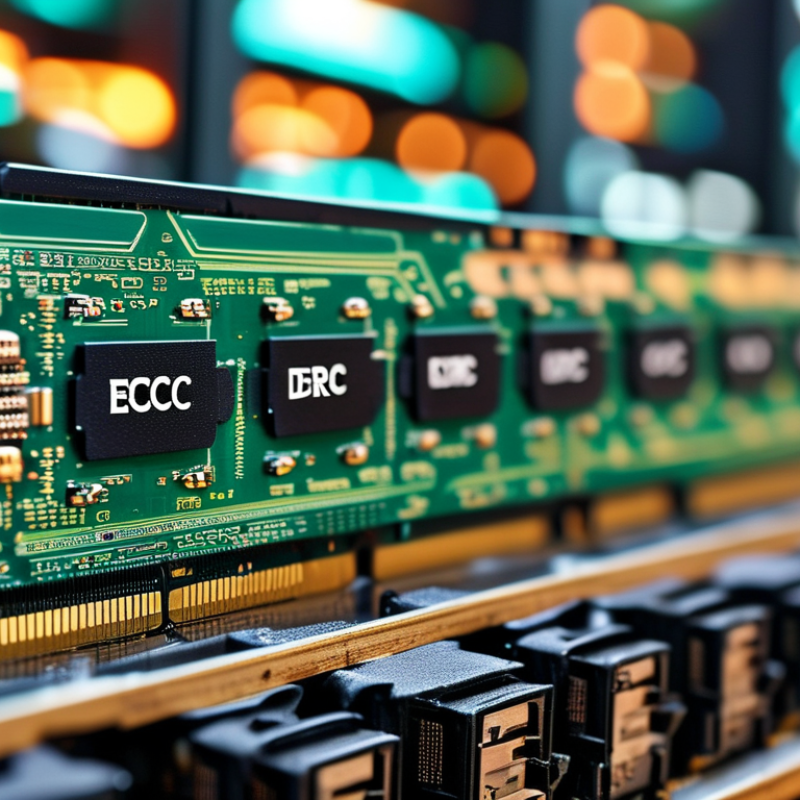
In the world of computer memory, ECC DDR5 RAM stands out for its reliability and performance. What is ECC DDR5 RAM? This advanced memory technology is designed to detect and correct data corruption. It plays a vital role in maintaining system stability, especially in critical applications like servers and data centers.
Understanding ECC DDR5 RAM can be challenging. Many users may not realize how it differs from standard DDR5. ECC stands for Error-Correcting Code, which means it adds an extra layer of security for data accuracy. As technology evolves, the demand for robust memory solutions increases. Many gamers and professionals seek ways to enhance their systems.
When considering ECC DDR5 RAM, one must reflect on its benefits versus costs. It may not be necessary for casual users. Yet, for those who prioritize stability and performance, ECC DDR5 RAM is worth exploring. Keeping these aspects in mind is essential when planning a system upgrade.
Overview of ECC DDR5 RAM Technology
ECC DDR5 RAM technology is poised to redefine data integrity and performance in computing. Enhanced Error Checking and Correction (ECC) is essential for systems requiring high reliability. Recent studies show that ECC memory can reduce data errors by up to 30%. This reliability is crucial for applications in finance, healthcare, and scientific research.
The DDR5 standard offers increased bandwidth and speed compared to its predecessors. With a data transfer rate reaching 6400 MT/s, DDR5 ensures swift access to information. Notably, ECC DDR5 can handle larger memory modules. This capability is particularly beneficial for servers and workstations that deal with massive datasets. Reports indicate a projected growth of 20% in the market for ECC DDR5 systems over the next five years.
Performance is important, but affordability also matters. ECC RAM often comes with higher costs due to its advanced features. Users should balance the need for reliability against budget constraints. Factor in that ECC RAM may not be necessary for all applications. Weigh the pros and cons before investing in this technology. Advanced features aren't always the answer; sometimes, simplicity is key.
Key Advantages of ECC DDR5 RAM over Non-ECC Variants
ECC (Error-Correcting Code) DDR5 RAM offers distinct advantages over non-ECC variants, particularly in data integrity. This type of memory is designed to detect and correct errors that can occur during data processing. According to a report by the International Data Corporation (IDC), systems using ECC RAM have an error correction rate of up to 99.99%. This significantly reduces the chance of data corruption, especially in mission-critical applications where accuracy is paramount.
One notable feature of ECC DDR5 RAM is improved performance compared to its non-ECC counterparts. ECC memory provides enhanced stability and reliability in high-performance settings. Systems that utilize ECC RAM can handle more intense workloads without crashing. In fact, research by the Semiconductor Industry Association (SIA) indicates that ECC memory can enhance operational efficiency by about 20% when managing large datasets. This benefit makes it a top choice for servers and high-end computing.
While ECC DDR5 RAM is generally more expensive than non-ECC alternatives, the trade-off can be worthwhile for certain users. Investing in ECC can mitigate future costs associated with data loss and system downtime. However, some may question whether the added expense justifies the benefits, particularly in everyday computing tasks where data integrity is less critical. It's important for users to assess their specific needs before making such decisions.
China Top 10 Facts About ECC DDR5 RAM You Need to Know
| Feature |
ECC DDR5 RAM |
Non-ECC DDR5 RAM |
Key Advantage |
| Error Correction |
Yes |
No |
Prevents data corruption |
| Speed |
Up to 8400 MT/s |
Up to 8400 MT/s |
Same speed, but safer |
| Capacity |
Up to 128GB per module |
Up to 128GB per module |
More room for applications |
| Latency |
Higher due to error checking |
Lower |
Trade-off for reliability |
| Power Consumption |
1.1V |
1.2V |
Lower power for ECC |
| Use Case |
Servers and workstations |
Gaming and personal use |
Better for critical applications |
| Cost |
Higher |
Lower |
More investment for stability |
| Market Adoption |
Growing in data centers |
Popular among gamers |
ECC gaining traction |
| Form Factor |
DIMM and SODIMM |
DIMM and SODIMM |
Same versatility in options |
| Future Compatibility |
Compatible with next-gen servers |
Suitable for gaming hardware |
ECC leads in enterprise |
Compatibility Considerations for ECC DDR5 RAM in Systems
When integrating ECC DDR5 RAM into systems, compatibility is crucial. This type of memory is designed for error correction, enhancing stability. Not all motherboards support ECC DDR5 RAM, so checking specifications is essential. Look for systems that explicitly indicate compatibility with this memory type. Securing the right motherboard can significantly impact performance.
The CPU also plays a vital role in compatibility. Many processors support ECC memory, but not all. Therefore, confirm whether your CPU has this feature. Additionally, ensure your BIOS is up to date. An outdated BIOS can lead to recognition issues with ECC RAM.
Power supply considerations should not be overlooked. ECC RAM may require different voltages compared to standard DDR5. Ensuring your system's power supply aligns with the RAM specifications will prevent operational failures. There may be performance differences based on individual system configurations. Testing various setups can yield insights into optimal configurations. Compatibility is often a puzzle requiring careful exploration.
Performance Enhancements Offered by ECC DDR5 RAM
ECC DDR5 RAM is gaining attention for its remarkable performance enhancements. It provides a critical upgrade over previous generations. With error correction capabilities, it ensures data integrity, making it ideal for data-sensitive applications. This reliability is crucial for servers and workstations that require consistent uptime.
The speed of DDR5 RAM is a game-changer. It boasts higher bandwidth and faster data transfer rates. This means applications can run smoother, especially during memory-intensive tasks. Enhanced performance translates into improved productivity, especially in fields like video editing and scientific simulations. Yet, users must consider compatibility, as not all systems support ECC DDR5 RAM.
Despite its advantages, ECC DDR5 RAM can come with trade-offs. It typically costs more than non-ECC RAM. Some may find this a barrier, especially for personal builds. There is also the potential for decreased performance in certain gaming scenarios. Balancing the need for speed and reliability becomes essential for users making their choice.
Performance Enhancements Offered by ECC DDR5 RAM
Notable Manufacturers and Market Trends for ECC DDR5 RAM in China
ECC DDR5 RAM is gaining traction in China, driven by rising demand for reliable memory solutions. Data centers, enterprises, and cloud service providers prioritize stability and error correction. This trend stems from the growth of big data and AI applications requiring secure data storage.
Notable manufacturers in China have surged forward. They focus on enhancing production capabilities and innovation in memory technology. Companies invest heavily in research to develop high-performance, efficient modules. The collaboration between tech firms and academia is fostering advancements in ECC DDR5 RAM. However, some manufacturers struggle with supply chain disruptions, impacting production timelines.
The market shows a shift towards energy-efficient memory solutions. As technology evolves, there is a push for sustainable practices in production. The increase in awareness about energy consumption provides an opportunity for companies to improve. However, balancing cost, performance, and sustainability remains a challenge. As the market develops, companies must adapt quickly to meet emerging needs.
FAQS
Not all motherboards support this memory type. Checking specifications is essential before purchasing.
The CPU matters a lot. Some processors support ECC memory, while others do not.
An updated BIOS is crucial for recognition. An outdated BIOS may cause issues with ECC RAM.
Power supply must align with RAM requirements. Different voltages can affect the RAM's operation.
There's increasing demand for reliable memory in data centers and cloud services. Stability is key.
Yes, supply chain disruptions impact production timelines. Some manufacturers struggle to keep up.
There’s a push for energy-efficient solutions amid rising awareness about consumption.
Balancing cost, performance, and sustainability remains a significant challenge for companies.
Testing configurations provides insights into optimal setups for performance and compatibility.
Conclusion
ECC DDR5 RAM, or Error-Correcting Code DDR5 RAM, is an advanced type of memory technology designed to detect and correct internal data corruption, making it a crucial component in high-reliability computing environments. The key advantages of ECC DDR5 RAM over non-ECC variants include enhanced data integrity and increased system stability, which is particularly important for servers and critical applications.
When considering compatibility, it’s essential to note that ECC DDR5 RAM may not work with all systems, particularly those designed solely for non-ECC RAM. Furthermore, ECC DDR5 RAM offers significant performance enhancements, such as improved bandwidth and reduced latency, making it an ideal choice for demanding computational tasks. The market for ECC DDR5 RAM in China is rapidly evolving, with notable manufacturers driving innovation in this segment, reflecting a growing trend towards high-performance and reliable memory solutions.

 Velmix