In the dynamic world of computer memory, understanding the DRAM vs SRAM difference is crucial for designers and engineers. Dr. Emily Chen, a leading expert in semiconductor technology, states, "The choice between DRAM and SRAM can define a system's performance." This highlights the importance of understanding memory types.
Dynamic Random Access Memory (DRAM) and Static Random Access Memory (SRAM) serve distinct functions. DRAM is slower but denser, making it ideal for main memory in computers. SRAM, on the other hand, is faster and more reliable but takes up more space. This fundamental contrast influences design choices in computing systems.
Yet, the decision isn't always straightforward. Each type presents trade-offs. For instance, while SRAM offers speed, its cost can be prohibitive. Configurations often require a blend of both, despite the inherent complexities. A thorough evaluation of the DRAM vs SRAM difference is essential, ensuring that the best memory type is chosen for specific applications. It's a balancing act of speed, cost, and capacity.
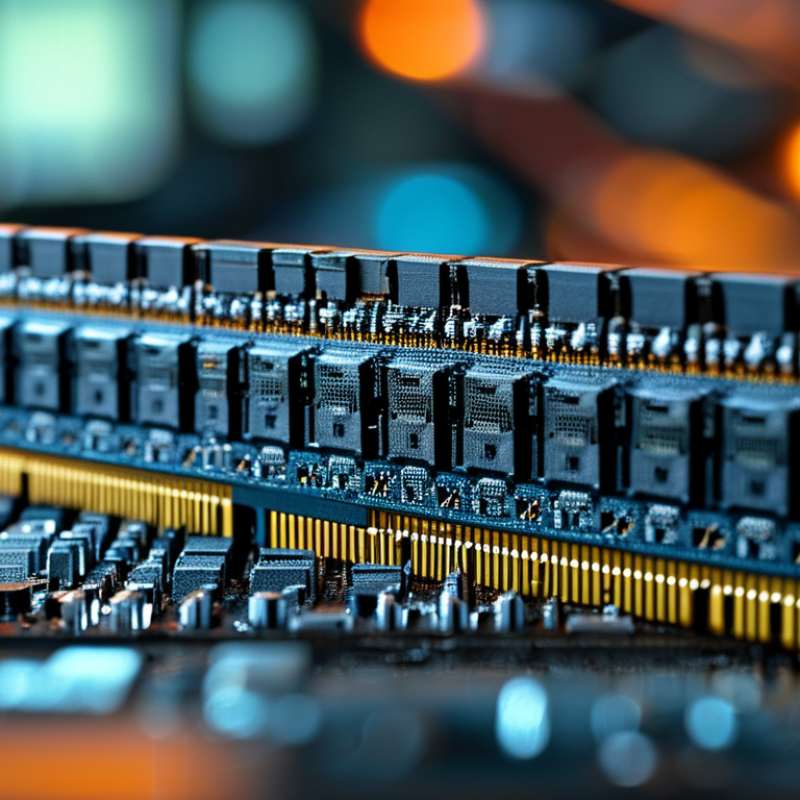
Dynamic Random Access Memory (DRAM) and Static Random Access Memory (SRAM) are two fundamental types of memory technologies. Both serve distinct roles in computing, yet they exhibit key differences in architecture, performance, and use cases. DRAM stores each bit of data in a separate capacitor, requiring frequent refresh cycles. According to recent industry reports, DRAM's density allows for large memory capacities at a lower cost. It's the go-to for main memory in computers, often reaching capacities upwards of 16GB per module.
In contrast, SRAM uses bistable latching circuitry to maintain state. This makes SRAM faster and more reliable, but it is also costlier and less energy-efficient. As noted in a 2023 technology analysis, SRAM typically operates with access times around 10 nanoseconds, while DRAM can take over 30 nanoseconds. This performance makes SRAM suitable for applications requiring quick access, like CPU caches. Despite its advantages, the higher cost leads to a more conservative adoption in consumer electronics.
Both technologies face ongoing challenges as demands on speed and efficiency increase. Emerging applications like artificial intelligence and high-performance computing stress the limits of both DRAM and SRAM. Balancing speed, cost, and energy consumption remains a crucial focus for researchers. The evolving landscape poses questions for manufacturers: How to innovate while staying competitive? Are we sacrificing reliability for speed? Each choice carries weight for future memory designs.
M and SRAM?
DRAM provides large storage capacity at a lower cost, making it ideal for main memory in computers.
SRAM operates around 10 nanoseconds, while DRAM takes over 30 nanoseconds, making SRAM faster.
SRAM is found in cache memory for processors, embedded systems, and networking devices due to its speed.
DRAM needs constant refreshing, which consumes more power compared to SRAM’s static data retention.
Increasing demands for speed and efficiency push DRAM and SRAM to their limits, leading to tough choices.
Yes, but only temporarily. DRAM needs constant power and refreshing to maintain stored data.
Yes, SRAM is costlier to manufacture due to its complex circuitry and lower density.
Faster memory like SRAM is less dense, while dense memory like DRAM is slower, affecting overall application performance.
They ponder innovations that balance speed and reliability without sacrificing overall efficiency and cost.
In the comparison of DRAM vs SRAM, it is essential to understand the fundamental differences between these two types of memory technologies. DRAM (Dynamic Random Access Memory) is characterized by its need for periodic refreshing to maintain data, making it slower yet more cost-effective for larger memory capacities. In contrast, SRAM (Static Random Access Memory) offers faster access times and does not require refreshing, but is generally more expensive and less dense.
When examining performance, SRAM leads with lower latency and higher speeds, making it suitable for applications requiring rapid data access, such as cache memory. On the other hand, DRAM is favored for its efficiency in power consumption and its ability to provide large amounts of storage, commonly utilized in main memory for computers and servers. Ultimately, understanding the key DRAM vs SRAM difference is crucial for choosing the right memory solution based on specific application needs.

 Velmix